

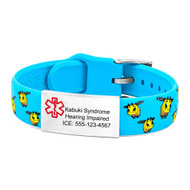
Should my Child with Kabuki Syndrome Wear a Medical ID?
Posted by Lori Torman on 1st Oct 2025
Given the numerous and variable health challenges associated with Kabuki syndrome, it is highly recommended that a child with the condition wears a medical ID. The ID can effectively communicate critical information to first responders and other medical professionals in an emergency, especially if the child is unable to speak for themselves.
Why a medical ID is important for a child with Kabuki syndrome
A medical ID helps address the major medical issues that can arise from Kabuki syndrome.
- Heart defects: As many as 70% of individuals with Kabuki syndrome have a congenital heart defect. The most common issues are left-sided obstructive lesions, including coarctation of the aorta and septal defects. An emergency medical ID can alert first responders to these critical cardiac conditions.
- Seizures: Epilepsy and seizures are common in children with Kabuki syndrome. Since a wide range of seizure types can occur, a medical ID can provide information about this condition and any seizure medication the child is taking.
- Hypotonia: Low muscle tone (hypotonia) is very common in Kabuki syndrome. In infants, this can cause feeding difficulties and swallowing issues.
- Immune dysfunction: Individuals with Kabuki syndrome have an increased susceptibility to infections and autoimmune disorders. In an emergency, it is crucial for medical staff to be aware of the child's weakened immune system to prevent further complications.
- Developmental and communication challenges: Many children with Kabuki syndrome have a mild to moderate intellectual disability and delayed speech. This may make it difficult for them to clearly communicate their medical needs during a crisis.
- Other conditions: Your child may have additional medical concerns, such as hearing loss, kidney problems, feeding difficulties, or specific allergies. All of this vital information can be included on a medical ID.
What to engrave on the medical ID
When ordering a medical ID, you will need to decide what information to engrave. Consult your child's doctor or medical team to determine the most critical information, which may include:
- Kabuki syndrome
- Any specific congenital heart defects (e.g., coarctation of the aorta)
- Epilepsy or history of seizures
- Allergies to food or medications
- Immune dysfunction
- Your emergency contact information
Types of medical IDs
If your child has sensory issues or is reluctant to wear a traditional bracelet, alternative options are available.
- Bracelets or necklaces: These are the most common type and are easily recognizable by first responders.
- Shoe tags: A tag that can be attached to the child's shoelaces.
- Stickers: Informative stickers that can be placed on a helmet, phone, or scooter.
- Seat belt cover: A cover that goes over the car seat belt, which is especially helpful during car travel.
You can find a wide variety of custom engraved Medical ID Bracelets, Tags, and Necklaces for children and adults by visiting StickyJ Medical ID.
This article is meant for information only. For medical advice, always consult your doctor.