

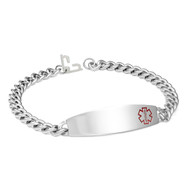
What is the best Medical ID for Alzheimer's or Dementia?
Posted by Lori Torman on 7th Jul 2026
For someone with Dementia or Alzheimer’s, the best type of medical bracelet cannot be easily removed by the wearer, remains highly visible to first responders, and contains clear emergency contact information. Because individuals with memory loss or cognitive decline may experience confusion, agitation, or a tendency to wander, choosing a bracelet requires specific safety considerations over typical fashion styles.
- Safety Clasp & Secure Closure Bracelets (Highly Recommended)
Individuals with dementia often try to take off jewelry if they find it unfamiliar or annoying. Specialized safety clasps require two hands to open or a specific pinching motion, making it nearly impossible for the wearer to remove it themselves.
StickyJ Medical ID offers highly rated surgical stainless steel bracelets designed explicitly for dementia. They feature heavy-duty, tamper-resistant lock mechanisms.
Crucial Engraving Guidelines
When you order the bracelet, prioritize clarity. Experts recommend engraving the following information:
- Line 1: Wearer’s First and Last Name
- Line 2: MEMORY IMPAIRED or ALZHEIMER'S / DEMENTIA (This tells first responders immediately why the person may be confused, uncommunicative, or resistant to help).
- Line 3: ICE: [Phone Number] (In Case of Emergency contact)
- Line 4: ICE 2: [Second Phone Number] or crucial medical conditions (e.g., "DIABETIC", "TAKES ASPIRIN").
When customizing a medical bracelet for someone with dementia, keeping the information concise and private is vital for their safety. You must balance providing enough data for first responders with protecting the individual from scammers or confusion.
- Home Address
Never engrave their home address directly onto the bracelet.
- The Risk: If the person wanders and becomes lost, anyone on the street can read the bracelet and know exactly where they live. This opens risks of theft or taking advantage of a vulnerable person.
- The Fix: Only list emergency phone numbers. First responders can use those numbers to look up the address safely.
- Full Social Security or Insurance Numbers
Do not include sensitive financial or identification numbers.
- The Risk: Medical identity theft is incredibly common. A visible Social Security Number (SSN) or private insurance policy number on a wrist makes them a prime target.
- Minor Allergies or Non-Urgent Conditions
Avoid cluttering the limited space with non-emergency details like seasonal allergies or long-past surgeries.
- The Risk: Text that is too small or crowded is hard for paramedics to read in a dark or chaotic emergency.
- The Fix: Only include life-threatening allergies (like penicillin or peanuts) and critical medications (like blood thinners).
- Overly Specific Directives (Like "Call Daughter")
Avoid using vague titles without names or context or listing too many family dynamics.
- The Risk: Space is wasted, and it can confuse a bystander who does not know who "Daughter" is.
- The Fix: Use the universal acronym ICE (In Case of Emergency) followed directly by the phone number, such as: ICE: 555-123-4567.